
Why Is My Ice Maker Leaking? 7 Common Causes & What to Do
In this article
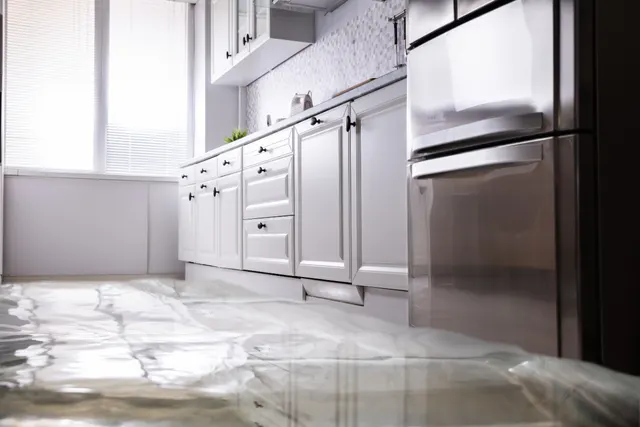
Opening the freezer for a scoop of ice and finding a puddle instead is frustrating. If you're asking "why is my ice maker leaking," the answer usually comes down to one of four things: a water supply problem, an ice maker that's overfilling, a frozen or blocked component, or a cracked part inside the assembly.
At Allsafe Appliance Repair, we help Los Angeles homeowners track down ice maker leaks every week. This guide covers the seven most common causes, the safe checks you can make at home, and the signs it's time to call for repair.
Why Is My Ice Maker Leaking Water?
An ice maker depends on a controlled flow of water into the mold, a freezer cold enough to freeze it on schedule, and parts that route the water and ice where they belong. When any one of those slips out of spec, water ends up where it shouldn't.
Where the water shows up is your best clue. Behind the refrigerator points to the supply line. A sheet of ice under the ice maker suggests overfilling or a fill tube problem. Water in or beneath the ice bin may point to melting ice, overfilling, misdirected fill water, or a damaged ice maker component.
The ice maker isn't always to blame, either. A clogged defrost drain, cracked drain pan, or worn door seal can leave puddles in the same spots. If the water seems to come from the fresh food section or the back of the unit, our guide on a fridge leaking water covers those causes.
1. Loose or Damaged Water Supply Line
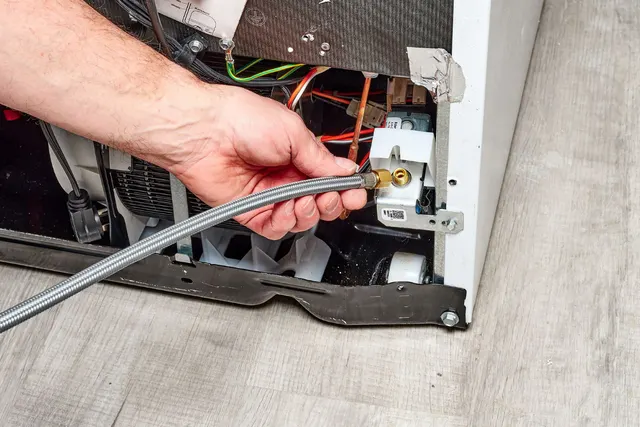
The water supply line is the thin tube that runs from your home's plumbing to the back of the refrigerator and delivers water to the ice maker. It's usually plastic, copper, or braided tubing and connects your home's water supply to the refrigerator's water inlet system.
Over time, those fittings can loosen, the tubing can crack or develop pinholes, and a line that gets pinched when the refrigerator is pushed back against the wall can kink and split. Any of these will leave water where the line runs, and because the supply line is under constant pressure, the leak doesn't stop when the ice maker does.
Common signs of a supply line leak:
- Water behind or underneath the refrigerator
- Dripping near the water connection at the wall or the back of the fridge
- Persistent leaking even between ice-making cycles
If you can safely see the connection behind the refrigerator, look for moisture or mineral crust around the fittings. A visibly wet fitting or a cracked line is a plumbing-side repair, and shutting off the supply valve will stop the leak until it can be fixed.
2. Faulty Water Inlet Valve
The water inlet valve is an electrically controlled valve, usually mounted at the back of the refrigerator, that opens for a controlled period to deliver water to the ice maker, then closes at the end of the fill cycle. It's the gatekeeper for every fill.
When the valve wears out or gets fouled with mineral deposits, it may not seal completely. Water keeps seeping through even when the ice maker isn't calling for it, and the mold slowly overfills until water spills over the edge and freezes wherever it lands. A valve that doesn't close completely is a common possible cause of ice maker leaks and overfilling.
Signs of a failing inlet valve:
- Dripping between cycles
- Ice maker overfilling
- Frozen sheets of water below the ice maker
- Ice cubes freezing together into one block
Because the inlet valve combines water and electrical connections, it should be tested and replaced by a technician rather than swapped out as a guess.
3. Frozen or Blocked Fill Tube
The fill tube is the short spout that directs water from the inlet valve into the ice mold. It sits at the back of the freezer, right above the ice maker, and it has to stay clear for water to land where it should.
If water dribbles from the tube between cycles, often because the inlet valve is seeping, that water freezes in place and ice builds up inside and around the opening. Very cold air at that spot can make the buildup worse. Ice buildup or other debris can partially block the fill tube, causing incoming water to spray or flow outside the ice mold instead of into it.
Signs of a fill tube problem:
- Ice buildup around the fill tube
- Water frozen beneath the ice maker
- Small or irregular ice cubes
- Reduced ice production
Clearing the ice may fix the symptom for a while, but if it comes back, something upstream is letting water through when it shouldn't, and that deserves a proper diagnosis.
4. Ice Maker Is Overfilling
Each fill cycle is supposed to deliver a measured amount of water, just enough to fill the mold. When the ice maker takes on more than that, the extra water spills over the sides before it has a chance to freeze, running down into the bin or onto the freezer floor.
Overfilling isn't always a separate component failure. More often it's the result of a fault upstream, which is why it overlaps with the two causes above.
Potential causes of overfilling:
- Faulty water inlet valve that doesn't close on time
- Water pressure that is outside the manufacturer's recommended range
- Ice maker control or fill-cycle malfunction that allows too much water into the mold
- Ice maker assembly failure in the timing or fill mechanism
Repeated overfilling leaves a distinctive mess: large clumps of cubes fused together, or a solid sheet of ice across the bottom of the bin or under the ice maker. If you're chipping ice blocks out of the bin every few days, overfilling is a likely cause.
5. Ice Maker or Refrigerator Isn't Level
The ice mold is a shallow tray, and it only holds its full measure of water when it sits level. If the refrigerator or ice maker is significantly out of level, water may collect toward one side of the mold and potentially spill during filling, even though the ice maker is delivering the right amount.
Signs of a leveling problem:
- Water collecting primarily on one side of the freezer or bin
- Uneven ice cubes, full on one end and shallow on the other
- Refrigerator doors that don't seal correctly or hang unevenly
Most refrigerators have adjustable front feet or leveling rollers. Follow the manufacturer's instructions in your owner's manual when checking and adjusting the level, since the correct tilt varies by model and some are designed to lean slightly backward so the doors close on their own.
6. Freezer Temperature Problems
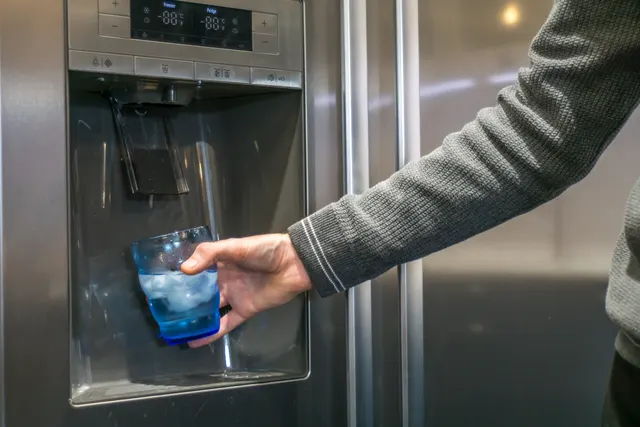
Sometimes what looks like a refrigerator ice maker leaking is really ice melting. If the freezer is running too warm, or if the temperature swings up and down through the day, cubes in the bin partially thaw and refreeze. The meltwater collects at the bottom of the bin, drips out of the dispenser chute, or freezes into a slab that traps the cubes above it.
Warm freezer temperatures can come from a door that's been left ajar, a worn door gasket, blocked air vents, dirty condenser coils on models with cleanable coils, or a failing fan or defrost component.
Look for these signs:
- Wet or soft ice
- Ice cubes clumping together
- Excess frost on the freezer walls or packaging
- Water underneath the ice bin
Check that the freezer is set near 0°F and that nothing is blocking the vents or holding the door open. If the temperature won't hold even with the settings correct, the cooling system needs professional attention, and the ice maker leak will keep coming back until it's fixed.
7. Cracked or Damaged Ice Maker Components
The ice maker assembly is made up of several plastic and metal parts that live in a harsh environment, cycling between wet and frozen many times a day. Over years of use, the ice mold, housing, seals, and other components can crack, warp, or deteriorate.
A crack in the mold or housing may only leak while the ice maker is filling, when water is sitting in the tray. Once the water freezes, the leak stops, so you see the evidence, a drip line or a frozen puddle, without ever catching it in the act.
Because these leaks originate inside the assembly and can look identical to an inlet valve or fill tube problem from the outside, professional diagnosis is the right move. A technician can run the ice maker through a fill cycle, watch where the water goes, and confirm whether the assembly needs to be repaired or replaced.
Why Is My Ice Maker Leaking and Making Cloudy Ice?
Leaking and changes in ice quality can sometimes stem from the same underlying problem. Issues with water flow, mineral buildup, or freezer temperature may affect both where the water goes and how the ice freezes.
For example, overfilling can produce oversized or fused cubes, while temperature problems can leave ice soft, partially melted, or clumped together. Cloudy ice, however, isn't necessarily a sign of a malfunction. Minerals, trapped air, and the way water freezes can all affect ice clarity. If your leak showed up around the same time your ice started looking different, mention both when you schedule service so the technician can check for a shared cause.
Our guide on the cloudy ice problem explains what's normal, what isn't, and which symptoms point to a refrigerator or ice maker issue worth having inspected.
What Should I Do If My Ice Maker Is Leaking?
Before you call for service, a few minutes of observation can narrow down the source and make the repair visit faster:
- Identify where the water appears. Behind the fridge points to the supply line. Under the ice maker points to overfilling or the fill tube. In or under the bin can mean melting ice, overfilling, misdirected fill water, or a damaged component.
- Check for visible ice buildup or loose connections. Look at the fill tube area inside the freezer and, if you can do so safely, the supply connection at the back of the refrigerator.
- Note when the leak happens. Continuous dripping suggests the supply line or a valve that won't close. Leaking only during the fill cycle suggests overfilling, a blocked tube, or a cracked mold.
- Look at the ice itself. Overfilled, fused, hollow, or oddly shaped cubes are a clue to what's going wrong upstream.
- Confirm the freezer temperature and level. These are the two adjustments most homeowners can safely make on their own by following the owner's manual.
Avoid attempting repairs that involve the water inlet valve, the ice maker's electrical connections, or any internal water-control components unless you have the training to do so safely. Those parts combine water and electricity in a tight space, and a mistake can turn a small leak into a bigger repair.
When to Call for Ice Maker Repair
Adjusting the temperature or correcting a leveling issue may resolve some leaks. Ice around the fill tube can sometimes be cleared, but recurring ice buildup usually indicates an underlying problem that needs to be diagnosed. When it doesn't, the cause is likely a worn valve, a failing control, or a damaged assembly, and those need proper testing and replacement parts.
Schedule professional service if:
- The leak keeps returning after you've cleared or adjusted what you can
- Water is pooling underneath the appliance
- The ice maker repeatedly overfills or produces fused blocks of ice
- Ice buildup returns after being cleared
- Ice production has slowed or stopped
- You can't identify where the water is coming from
An ice maker water leak rarely fixes itself, and water left sitting under a refrigerator can damage flooring and cabinets long before the ice maker fails completely. If you're searching for ice maker repair near me in Los Angeles County, Allsafe Appliance Repair can diagnose the source of the leak, replace the parts that need it, and get your ice maker filling and freezing the way it should.