
Ice Maker Small or Hollow Cubes: Causes, Checks & Fixes
In this article
If your ice maker has suddenly started producing small, hollow, or fragile cubes instead of full-size ice, it's usually a sign that something is limiting the amount of water reaching the ice mold. This ice maker small or hollow cubes problem is more common than you might think. In most cases, the ice maker itself is still working. It simply isn't getting enough water to make a complete batch of ice. The good news is that the most common causes are easy to diagnose, and many can be fixed without a service call.
At Allsafe Appliance Repair, we troubleshoot ice makers every day across Los Angeles. If you've been wondering why your refrigerator is making small ice cubes, you're not alone, it's one of the most common questions we hear. Below we walk through what these undersized cubes actually mean, the most common reasons they form, the step-by-step checks you can safely do yourself, how to prevent the problem from coming back, and when it's time to bring in a technician.
What Small or Hollow Cubes Actually Mean
A healthy ice maker follows a predictable rhythm. It fills its mold with a measured amount of water, freezes that water solid over a set period, then warms the mold just enough to release fully formed cubes into the bin. Each of those steps depends on the one before it, so a problem early in the cycle shows up as a flaw in the finished cube.
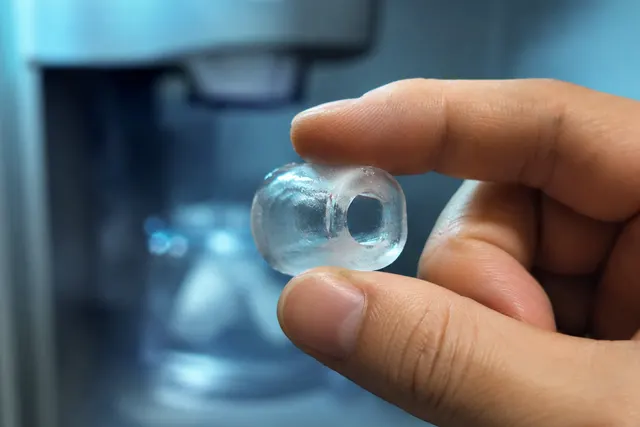
Small cubes mean the mold is being underfilled. The freezing and harvest cycles are working normally, but there simply wasn't enough water in the tray to begin with, so every cube comes out a size or two too small. Hollow cubes form when the mold doesn't receive enough water either: the outside freezes first, leaving a thin shell with an empty center that cracks easily.
Both symptoms come back to water volume and timing. If water arrives too slowly, stops early, or freezes before it reaches the mold, you get partial cubes.
You may also notice related clues, such as a lower-than-usual ice output, cubes that clump together because they're wet when they drop, or a longer wait between batches. These all reinforce that the unit is struggling to get a complete fill.
This is different from getting no ice at all, which usually signals a complete supply or power failure rather than a partial one. If nothing is coming out, our guide on what to do when your ice maker isn't making ice covers that scenario in detail.
Common Causes of Small or Hollow Ice Cubes
Several issues can starve the mold of water. Working from the most common to the least, here are the culprits we see most often and why each one shrinks your cubes.
Clogged or Expired Water Filter Restricts Flow
This is the number-one cause we find in the field. The refrigerator's water filter traps sediment and minerals, and over time those deposits restrict flow. Once the filter is past its lifespan, the mold no longer fills completely within its timed window, so cubes come out small or hollow. Most manufacturers recommend replacing the filter every six months, and homes with hard water may need to do it sooner.
Low Household Water Pressure Reduces Ice Production
Most refrigerator ice makers require at least 20 psi of water pressure, with many performing best between about 30 and 60 psi. When pressure drops below that range, the water inlet valve opens on schedule but can't deliver a full charge of water before the fill time ends. Homes on well systems, houses with whole-house filtration, or properties at the end of a long municipal line are especially prone to borderline pressure.
Kinked or Frozen Water Line Blocks the Fill
The thin supply line behind the fridge is easy to pinch when the appliance is pushed back against the wall. A kink chokes off flow without stopping it completely. Just as common is a partially frozen fill tube, the small tube that carries water into the mold. If cold air reaches it, a plug of ice forms and only a trickle gets through, producing those telltale hollow shells. A frozen fill tube can also be caused by a water inlet valve that isn't closing completely and slowly leaks water between fill cycles.
Failing Water Inlet Valve Limits Water
The inlet valve is the electrically controlled gate that lets water into the ice maker. As it ages, the internal screen can clog with sediment or the valve can weaken so it no longer opens fully. The result is the same: a reduced flow that underfills the mold every cycle. A failing valve is one of the most frequent reasons small cubes persist even after the filter and line have been ruled out.
Low Fill-Level Setting Shrinks Every Cube
Some models include an adjustable water-fill level, while many newer refrigerators do not. On the units that have one, either a small dial inside the ice maker or a setting in the control panel, a level that was bumped or set too low will produce undersized cubes every time, even though nothing is actually broken. It's always worth confirming this setting before assuming a part has failed.
Partially Closed Shutoff Valve Limits Flow
Behind or beneath the refrigerator, a shutoff valve controls the water feeding the appliance. If it was never opened all the way after an installation or a move, it limits flow without cutting it off entirely. A partially closed valve is easy to overlook but simple to fix.
Simple Checks You Can Do Yourself
Before calling anyone, run through these homeowner-friendly steps in order. Most take only a few minutes, and they move from the easiest, most likely fixes to the slightly more involved ones.

1. Replace the Water Filter
Replace the water filter. This is the single most effective fix. If your filter is older than six months, or you can't remember the last time you changed it, swap in a fresh, manufacturer-approved cartridge. After installing it, run several glasses of water through the dispenser to clear trapped air, then let the ice maker run a few cycles. Restored flow often brings cube size right back to normal on its own.
2. Inspect the Water Line and Shutoff Valve
Inspect the water line and shutoff valve. Carefully pull the refrigerator away from the wall and look over the supply line for kinks, sharp bends, or crimps. Straighten any you find, and make sure there's enough slack that pushing the fridge back won't pinch it again. While you're back there, confirm the shutoff valve is open all the way; even a half-closed valve can noticeably shrink your cubes.
3. Check Your Water Pressure
Check your water pressure. Test a few other fixtures in the home. If the kitchen faucet and nearby taps also run weak, the issue is likely household water pressure rather than the appliance itself. In that case, addressing the home's pressure, or any whole-house filter that may be clogged, will do more good than working on the fridge.
4. Thaw a Frozen Fill Tube
Thaw a frozen fill tube. If you suspect a frozen fill tube, unplug the refrigerator and allow the blockage to thaw naturally, or carefully warm the tube with a hair dryer on a low setting. Never use an open flame or a sharp object to clear the ice. Once the tube is clear, plug the unit back in and the mold may begin filling normally again after a few ice-making cycles.
5. Confirm the Freezer Temperature
Confirm the freezer temperature. Set the freezer to around 0°F. A freezer that's significantly colder than recommended can contribute to fill-tube freeze-ups, while one that's too warm may prevent the ice maker from cycling normally. Give the freezer 24 hours to stabilize at the new setting before judging whether cube size has improved.
6. Check the Fill-Level Adjustment
Check the fill-level adjustment. Consult your owner's manual to see whether your model has an adjustable fill level, since many newer units do not. If yours does, nudge it up a step and run a few cycles. This small adjustment occasionally solves the problem entirely on units that were simply set too low from the start.
How to Prevent Small or Hollow Cubes
Once you've restored full-size cubes, a little routine maintenance keeps them coming. Build these habits into your kitchen care:
- Change the filter on schedule: Mark a reminder every six months, or sooner if you have hard water, so flow never drops off gradually.
- Leave clearance behind the fridge: A couple of inches of space prevents the supply line from kinking when the appliance is pushed back.
- Keep the freezer organized: Don't block vents with packed food, since steady airflow helps maintain the consistent temperature the ice maker needs.
- Empty the bin occasionally: If you don't use much ice, clearing out old cubes now and then keeps the bin from clumping and the sensor reading accurately.
- Watch for early warning signs: Slightly smaller cubes or lower output are easier to address before they become a full slowdown.
When to Call a Professional
If you've replaced the filter, cleared the line, confirmed good water pressure, and checked the fill setting but still get undersized cubes, it's time for a professional diagnosis. A failing water inlet valve is one of the most common remaining causes and requires proper testing before replacement. Recurring fill-tube freeze-ups can also point to an airflow or defrost-system issue that needs a closer diagnostic look rather than a quick fix.
It's also worth calling a pro if you notice water pooling under or behind the refrigerator, hear unusual buzzing from the valve area, or see the problem returning soon after a DIY repair. These are signs of a deeper fault that's better caught early.
Our factory-trained technicians can pinpoint the exact failure and restore full-size cubes quickly, with the right replacement parts on hand. If you're in the area, our team handles Beverly Hills refrigerator repair along with service across greater Los Angeles, backed by a parts and labor warranty.