
Why Your Ice Maker Has Stinky Ice: Common Problems & Causes
In this article
When your ice maker has stinky ice, dirty ice, or tastes strange, it can make you question whether it is safe to use. Ice from your refrigerator ice maker should be clear, fresh-tasting, and odor-free. Cloudy, discolored, musty, or bad-tasting ice is usually a sign that something needs attention.
In this blog, we will explain the most common reasons a refrigerator ice maker produces dirty or smelly ice, what symptoms to watch for, which simple maintenance steps may help, and when it is best to schedule professional service.
Why Does My Ice Maker Have Dirty or Smelly Ice?
Refrigerator ice makers rely on clean water, proper freezer airflow, sanitary storage, and working internal components. When one part of that system is affected, ice quality can decline. The sections below start with the most common maintenance-related causes before moving into issues that may require professional diagnosis.
Dirty or Expired Water Filter
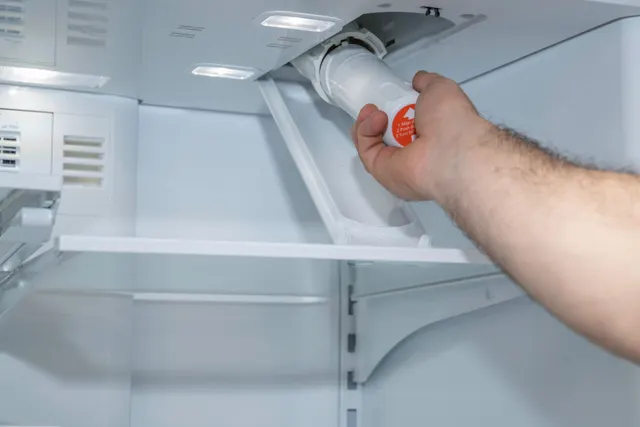
The water filter helps reduce sediment, minerals, and impurities before water enters the ice maker. Over time, the filter can become clogged or saturated, which may affect the taste, smell, and appearance of the ice.
A filter issue may cause:
- Cloudy or white-looking ice
- Odd flavors
- Visible particles
- A stale or unpleasant smell
If the filter has not been replaced according to the manufacturer’s schedule, changing it is a safe first step. If the ice still smells or tastes bad afterward, the problem may be elsewhere in the refrigerator’s water system and should be inspected by a professional.
Old Ice Sitting in the Bin
Ice that sits in the ice bin too long can absorb odors from the refrigerator or freezer area. Even if the ice was clean when it was made, it can become stale after sitting unused for an extended period.
This is common in homes where the refrigerator ice maker is not used every day. It can also happen after vacations, seasonal absences, or periods when the appliance produces more ice than the household needs.
Old ice may appear:
- Cloudy
- Clumped together
- Stale-smelling
- Unpleasant in taste
Emptying old ice and wiping accessible bin surfaces can help improve ice quality. If the fresh ice that follows still smells bad, the issue is likely not limited to old ice.
Dirty Ice Bin or Dispenser Area
The ice bin and dispenser area can collect residue over time. Hands, spills, dust, and moisture can all contribute to buildup. Even if the ice maker is producing clean ice, a dirty bin can make the ice smell or taste unpleasant after it is stored.
Helpful prevention habits include:
- Discarding old ice periodically
- Wiping accessible bin surfaces
- Keeping food odors under control
- Avoiding harsh cleaners that leave strong smells behind
If the bin becomes dirty again quickly or the smell returns soon after cleaning, the issue may be deeper inside the refrigerator or ice maker assembly. A professional can inspect the appliance for hidden buildup or other internal problems.
Food Odors in the Refrigerator or Freezer
Ice can absorb odors from nearby foods, especially in refrigerator-freezer combinations. Strong-smelling items such as seafood, onions, garlic, leftovers, or uncovered containers can affect the smell and taste of the ice.
Odor transfer is more likely when:
- Food is stored uncovered
- Expired items remain in the refrigerator or freezer
- Spills are left on accessible surfaces
- The appliance interior needs cleaning
Storing food in sealed containers and keeping accessible surfaces clean can help reduce odor transfer. If the odor remains after food storage issues are corrected, there may be an airflow issue or hidden contamination inside the appliance.
Mold or Mildew Buildup
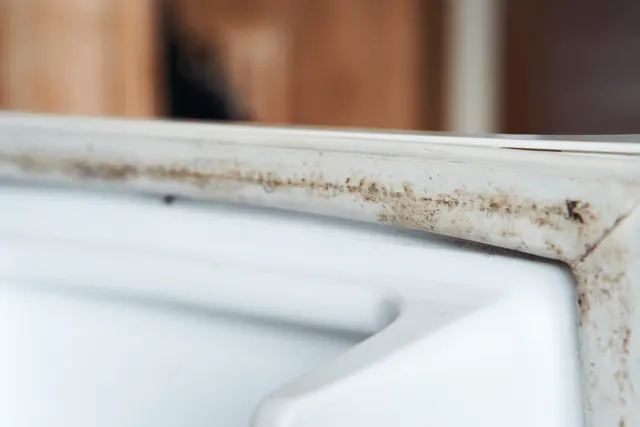
Refrigerators create moisture, and moisture can encourage mold or mildew when accessible areas are not cleaned regularly. Mold or mildew is more likely to develop in moist areas around the dispenser chute, seals, drip areas, or refrigerator compartment rather than inside fully frozen areas.
Mold or mildew often creates:
- A musty smell
- Stale-tasting ice
- Dark spots near accessible surfaces
- Slimy residue around the bin or dispenser area
Regularly wiping accessible surfaces and removing old ice can help reduce this risk. If the odor continues after basic cleaning, contamination may be deeper inside the appliance. A technician can determine whether professional cleaning or repair is needed.
Mineral Deposits From Hard Water
Hard water contains minerals such as calcium and magnesium. Over time, these minerals can build up inside the refrigerator’s ice maker system and affect how ice forms. Mineral buildup can contribute to cloudy or white-looking ice, white residue, strange tastes, or reduced performance.
Possible signs of mineral buildup include:
- Cloudy cubes
- White residue
- Chalky or stale-tasting ice
- Smaller or irregular ice cubes
- Reduced ice production
Basic cleaning of accessible surfaces may help with visible residue, but internal buildup should be handled by a professional. Refrigerator ice makers have water lines, valves, and electrical components that require proper diagnosis and service.
Restricted Water Flow
A refrigerator ice maker needs steady water flow and proper freezing temperatures to produce clean, consistent ice. If the water supply is restricted, the ice maker may not fill properly and may produce poor-quality ice. Restricted water flow can contribute to smaller cubes, cloudy ice, slow production, or unusual tastes.
Restricted water flow may be connected to:
- A clogged filter
- Mineral buildup
- Debris in the water line
- A failing water inlet valve
Because water lines and internal parts can be sensitive, it is best to avoid trying to access or repair these components yourself. If your ice maker seems to be struggling with water flow, professional service can help determine whether the issue is connected to a clogged ice maker water line.
Low Ice Production Along With Dirty Ice
Dirty or smelly ice may appear at the same time as another performance issue. If your refrigerator ice maker is making less ice than usual, producing small cubes, or cycling irregularly, the problem may involve more than cleaning.
Ice quality and production problems may be caused by:
- Water supply restrictions
- Internal component wear
- Freezer temperature issues
- Control problems
- Filtration problems
When ice quality problems happen alongside low production, professional diagnosis becomes even more important. For related information, you can review the common causes of an ice maker not making ice.
Worn or Failing Ice Maker Components
Refrigerator ice makers use several internal parts to control water flow, freezing cycles, and overall operation. If one of these components starts to fail, the ice may become inconsistent, cloudy, dirty, or unpleasant.
Failing ice maker components may lead to:
- Irregular cube shapes
- Unusual appliance noises
- Slow or inconsistent ice production
- Recurring odors or poor ice quality
These problems are not usually solved with basic cleaning alone. Components such as valves, sensors, and controls require proper testing and diagnosis. Because these systems involve water and electricity, repairs should always be handled by a trained professional.
Lack of Routine Maintenance
Routine maintenance is one of the most effective ways to prevent dirty or smelly ice. Refrigerator ice makers operate in a cold, moist environment, which means buildup can develop gradually even when the appliance appears to be operating normally.
Maintenance can help reduce:
- Mineral scale
- Odor buildup
- Residue inside accessible areas
- Performance strain
- The risk of recurring ice quality problems
For homeowners who rely on clean, fresh ice every day, scheduling refrigerator repair is a smart way to protect both the appliance and the quality of the ice it produces.
Trying to access internal components without the proper training can pose safety risks and may cause further damage to the appliance. A professional repair visit helps protect the refrigerator while restoring cleaner, better-tasting ice.