
Fridge Smells Bad? 11 Common Problems

In this article
When your fridge smells bad, it can make your entire kitchen feel unpleasant and may raise concerns about food freshness and appliance performance. In this blog, we’ll explain the most common reasons a refrigerator smells bad, the warning signs to watch for, which maintenance steps may help, and when it’s best to schedule professional refrigerator service.
The FDA recommends keeping refrigerator temperatures at or below 40°F to help reduce food spoilage and bacterial growth. Most refrigerators should maintain temperatures between 35°F and 40°F for proper food preservation and odor control.
Why Does My Fridge Smell Bad?
A refrigerator depends on steady cooling, proper airflow, clean storage areas, and controlled moisture levels to stay fresh and odor-free. When one part of that system is disrupted, unpleasant smells can develop and return even after basic cleaning.
If refrigerator odors continue repeatedly, the sections below move from the most common maintenance-related causes to problems that may require professional diagnosis and repair.
Spoiled or Expired Food

Spoiled food is one of the most common reasons a refrigerator smells bad. Forgotten leftovers, expired produce, leaking containers, or uncovered food can create strong odors that spread throughout the appliance.
Food-related odors may come from:
- Rotting fruits or vegetables
- Expired dairy products
- Leaking meat packaging
- Uncovered leftovers
Removing expired food and wiping accessible shelves, drawers, and bins with mild soap and warm water may help eliminate odors. If refrigerator odors continue after cleaning, the source may be hidden deeper inside the appliance.
Hidden Spills Inside the Refrigerator
Small spills can easily collect under drawers, along shelf edges, or behind bins. Over time, spilled liquids may create sour, musty, or rotten smells. Dairy products, sauces, juice, and raw meat juices are especially likely to leave behind lingering odors.
Spill-related odors may be more noticeable when:
- The smell becomes stronger when the refrigerator door opens
- Sticky residue is visible on shelves or bins
- Drawers smell bad even after food is removed
- The odor returns shortly after cleaning
Cleaning all accessible surfaces can help remove trapped residue. If odors quickly return, moisture or drainage issues may also be contributing to the problem.
Food Odors Absorbed Into the Refrigerator Interior
Strong-smelling foods can gradually affect the odor of the entire refrigerator compartment. Seafood, onions, garlic, leftovers, and uncovered containers may leave lingering smells behind, especially if they remain stored for several days.
Odor transfer is more likely when:
- Food is stored without sealed containers or lids
- Strong-smelling foods stay in the refrigerator for extended periods
- Interior surfaces have not been cleaned recently
- Poor airflow allows odors and excess moisture to linger inside the refrigerator
Properly sealing food and regularly cleaning accessible surfaces may help reduce odor transfer. If lingering refrigerator smells continue despite improved food storage, airflow, or moisture problems may be involved.
Dirty Door Gasket
The refrigerator door gasket creates the seal that keeps cold air inside the appliance. Because the gasket contains folds and grooves, it can collect food residue, moisture, and mildew over time, creating sour or musty smells near the door.
A dirty or damaged gasket may cause:
- Musty odors around the refrigerator door
- Visible buildup inside gasket folds
- Excess moisture near the door opening
- Food spoiling faster than expected
Wiping the visible gasket surface with mild soap and water is a safe maintenance step. If the gasket is cracked, loose, or not sealing properly, professional inspection is recommended to prevent cooling and moisture problems.
Blocked Airflow
Cold air must circulate properly throughout the refrigerator to maintain safe temperatures and control moisture. When shelves are overcrowded or vents are blocked, stale air can become trapped, and odors may grow stronger.
Restricted airflow may cause:
- Uneven cooling
- Warm spots inside the refrigerator
- Food spoiling too quickly
- Odors returning after cleaning
Rearranging items so air can circulate more freely may help improve performance. If odors occur alongside temperature problems or unusual sounds, the refrigerator may have a fan or cooling system issue. You can learn more in this guide explaining why a refrigerator makes loud noises.
Moisture Buildup Inside the Refrigerator
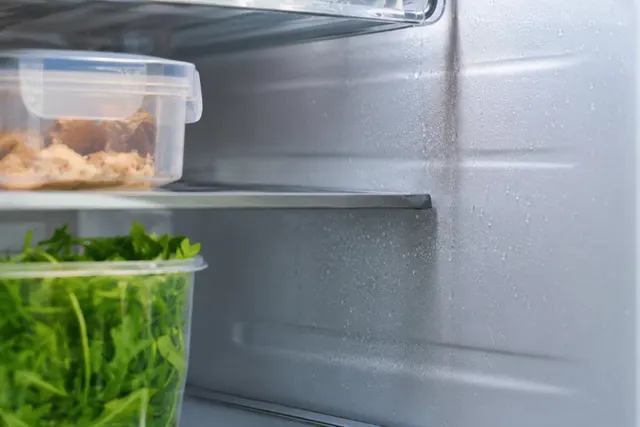
Excess moisture inside the refrigerator can create musty smells and encourage mildew growth. Moisture may develop when the door seal is failing, airflow is restricted, or the appliance struggles to maintain proper temperatures.
Moisture problems may appear as:
- Water collecting under drawers
- Condensation on interior walls
- Persistent musty odors
- Damp food containers or packaging
Visible moisture should not be ignored. If condensation and odors continue, professional service may be needed to inspect the cooling system, drainage system, or door seal.
Clogged Defrost Drain
Many refrigerators use a defrost drain to move condensation away from the fresh food compartment. If that drain becomes clogged or restricted, water may collect inside the appliance and create unpleasant odors.
A clogged defrost drain may cause:
- Water pooling under drawers
- Sour or musty smells
- Recurring interior moisture
- Odors returning after cleaning
Because drainage problems may involve internal refrigerator components, they are best inspected by a qualified technician. Professional service can help prevent recurring odors and possible water damage.
Dirty Drain Pan
The drain pan collects condensation during normal refrigerator operation. Over time, moisture, dust, and debris may build up inside the pan and create stale or musty odors that seem to come from the appliance itself.
A dirty drain pan may be more likely when:
- The smell is strongest near the bottom of the refrigerator
- The odor returns after the interior is cleaned
- Excess moisture is present around the appliance
- The refrigerator has not been professionally serviced recently
Some drain pans are difficult to access safely, so professional service may be helpful if you suspect the drain pan is causing the odor.
Mold or Mildew Growth
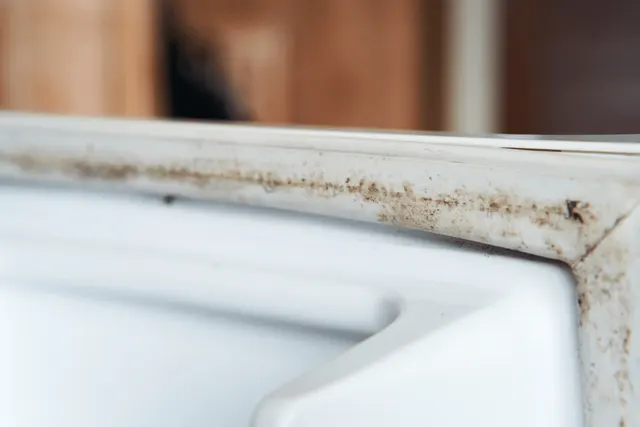
Mold and mildew can develop when moisture remains trapped inside the refrigerator or around accessible surfaces. Even small amounts of buildup may create strong musty odors.
Mold or mildew growth may cause:
- Persistent musty smells
- Dark spots around drawers or door gaskets
- Slimy residue on surfaces
- Odors returning quickly after cleaning
Cleaning accessible surfaces may help reduce visible buildup. However, if lingering refrigerator odors continue, hidden moisture or airflow issues may need professional diagnosis.
Pest or Rodent Odors
In rare cases, strong foul odors may come from pests near the refrigerator’s lower compartments or insulation areas. This type of smell is often strongest behind or underneath the appliance and may continue despite cleaning the interior.
Pest-related odors may be more noticeable when:
- The smell is strongest behind the refrigerator
- The odor continues after the interior is cleaned
- There are signs of pests near the appliance
- The refrigerator is located in a garage or older home
If you suspect pests or rodents are causing the smell, a professional inspection may help identify the source safely.
Internal Refrigerator Component Problems
If your fridge smells bad, it may be connected to mechanical or electrical problems. A failing fan, cooling system issue, control problem, or hidden moisture buildup can affect refrigerator performance and allow odors to persist.
Internal component problems may be present when odors occur alongside:
- Unusual noises
- Inconsistent temperatures
- Food spoiling too quickly
- Recurring moisture buildup
- Odors that do not improve after cleaning
Electrical and mechanical refrigerator repairs should always be handled by a trained technician. Attempting to access internal components without proper training can be unsafe and may lead to further appliance damage.
When to Schedule Professional Refrigerator Service
It may be time to schedule professional refrigerator service if odors continue after removing expired food, cleaning accessible surfaces, and improving airflow inside the appliance. Persistent smells can indicate drainage problems, airflow issues, failing seals, or internal component concerns.
Professional service is recommended when you notice:
- Odors that return after cleaning
- Water pooling inside the refrigerator
- Musty smells near the door or lower compartment
- Warm spots or uneven cooling
- Food spoiling faster than normal
- Unusual noises or inconsistent operation
A professional technician can safely inspect the appliance, identify the source of the odor, and recommend the proper repair. If your refrigerator needs expert attention, schedule refrigerator repair Beverly Hills service to help restore clean, reliable cooling.