
Dishwasher Not Draining? Common Causes and How to Fix It
In this article
You open the dishwasher expecting clean plates and find dirty water sitting across the bottom instead. Maybe the dishes still feel gritty, or a smell tells you something isn't right before you even pull out the rack. A dishwasher not draining can turn a finished load into another kitchen chore.
Some drainage problems start with food caught in a filter or a blocked connection under the sink. Others involve a pump, valve, or electrical control that needs professional diagnosis. The trick is knowing which checks you can safely make and when to stop.
This guide from Allsafe Appliance Repair walks through seven common causes, a practical troubleshooting checklist, and ways to keep the problem from coming back.
Why Is My Dishwasher Not Draining?
Wastewater needs a clear path out of the dishwasher. Depending on the design, that path includes a filter or screen, a drain pump, valves, a drain hose, and a connection to the sink drain or garbage disposal. A clog, an installation problem, or a failed component anywhere along the way can leave water behind.
A little water doesn't always mean a problem. Some dishwashers normally retain a small amount in the recessed sump below the filter. Water spread across the tub floor, dirty water remaining after a completed cycle, or water that returns after draining deserves attention. Check your owner's manual to see how much standing water is normal and which parts are safe to clean yourself.
Timing can offer a useful clue. If the problem started right after a garbage disposal replacement, the installation is a good place to start. Water returning when the sink drains points toward a shared drain or backflow problem. These clues help narrow the search, but they don't prove that a particular part has failed.
Also check for excessive suds. Using the wrong detergent or too much dishwasher detergent can interfere with proper draining. Use only detergent made for automatic dishwashers, in the recommended amount. If the tub is full of suds, stop the cycle and follow your owner's manual before trying another cycle.
Before inspecting or cleaning: Disconnect the dishwasher's power at its accessible plug with dry hands, or switch off its circuit breaker. The control panel's Off button is not a power disconnect. Let hot water cool, and watch for broken glass or other sharp debris. Don't reach blindly into openings or remove electrical covers. Avoid chemical drain cleaners: they can damage appliance materials and leave hazardous liquid in the drain path.
1. Clogged Dishwasher Filter
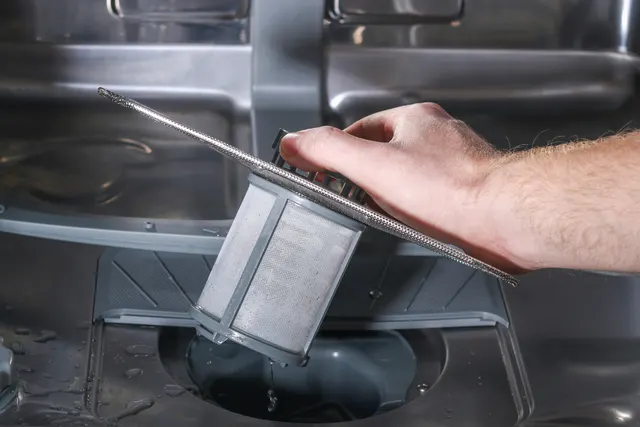
The filter catches food particles before they circulate through the machine. As grease and scraps collect, water may have trouble moving through the filter area. A coated screen, grit left on dishes, and recurring odors are good reasons to check it.
On many models, the removable filter sits in the bottom of the tub beneath the lower rack. Others use a different filtration system, so don't twist or pull a part just because it looks like a filter.
For a homeowner-removable filter:
- Keep power disconnected, remove the lower rack, and follow the manual's unlocking or removal instructions.
- Lift the filter carefully. Look for sharp debris before handling it, and wear protective gloves. Leave lodged glass or debris you can't safely reach to a technician.
- Rinse the filter under warm running water. Use a soft brush for residue if your manual allows it; avoid abrasive tools that could damage the mesh.
- Reinstall and lock the filter exactly as directed. Never run the dishwasher with the filter missing or loose.
If buildup returns quickly, check the manufacturer's cleaning schedule and adjust it for how often you use the machine. If your dishwasher smells bad even after cleaning, trapped wastewater or another wash-system problem may be contributing.
2. Blocked or Kinked Drain Hose
The drain hose carries wastewater from the dishwasher to the household drain connection. A hose pinched by items under the sink, bent sharply during installation, or clogged internally with grease and debris can restrict that flow.
Look at the exposed section under the sink for crushing, kinks, wet connections, or storage items pressing on it. Move nearby items out of the way, but don't tug on the hose or change its routing. The required high loop or air-gap arrangement depends on the installation instructions and local requirements.
A hose can look clear on the outside and still be blocked internally. If checking it requires disconnecting the hose or pulling out the dishwasher, leave the job to a qualified professional.
3. Clogged Garbage Disposal
Many dishwashers drain into a garbage disposal, though not every kitchen uses this setup. Food buildup in the disposal or a slow sink drain can prevent wastewater from leaving the dishwasher even when its pump is working.
If the sink and disposal work normally, clearing ordinary food waste with cold running water, as the manufacturer directs, may help. Do not run a jammed, humming, leaking, or backed-up disposal.
Before inspecting or cleaning it, disconnect the disposal's own power separately from the dishwasher. Never put hands or tools into an energized disposal. Leave jam removal or internal work to a qualified professional if you're unsure of the safe procedure.
Did this start after a new disposal was installed? The dishwasher inlet may still have its knockout plug in place. Have the installer or a qualified professional check and remove it if needed for the dishwasher connection.
If the sink also backs up, the household plumbing may need attention from a plumber rather than a dishwasher part replacement.
4. Clogged Air Gap
An air gap is the small fitting sometimes installed beside the kitchen faucet. It creates a physical air break in the drain system that helps prevent contaminated sink or drain water from backing up into the dishwasher. Not every installation has one.
Water spilling from its openings during draining can mean debris has blocked the fitting or the hose leading from it to the disposal or sink drain. It isn't something to seal shut.
With the dishwasher and any connected disposal disconnected from power, follow the air-gap manufacturer's instructions for removing its cap. If the instructions permit, lift away loose, visible debris and clean the removable cap with a small soft brush. Don't force tools down the tubing or disconnect hoses. Refit the cap properly before testing.
If water still spills out, have the downstream drain path checked. Cleaning the cap won't solve a blockage farther along the hose.
5. Drain Pump Is Blocked or Damaged
The drain pump pushes wastewater out of the tub. A piece of glass, a food fragment, or other debris can obstruct the pump area. A worn or damaged pump may also fail to move water even when the drain path is clear.
Possible signs include:
- Humming during the drain stage while water stays in the tub
- Grinding, rattling, or a new unusual noise
- A cycle that stops with water remaining or a drain-related error
Those symptoms aren't a diagnosis by themselves. A restricted hose or control fault can look similar. Don't keep restarting a noisy dishwasher, reach into the pump opening, or try to turn internal parts by hand.
Leave pump access and repair to a technician, who can check for obstructions and determine whether replacement is necessary.
6. Drain Valve or Check Valve Problem
Depending on the model, a drain valve helps direct water out of the dishwasher, while a check valve helps stop discharged water from flowing back in. Some designs use a separate drain valve and others don't.
A stuck or damaged valve may restrict drainage or allow dirty water to return after the pump stops. You might notice that the tub seems to empty, then has water in it again later.
Backflow can also come from an installation or shared-drain problem. Have a technician check the drain arrangement and valve components before replacing anything.
7. Dishwasher Control Problem
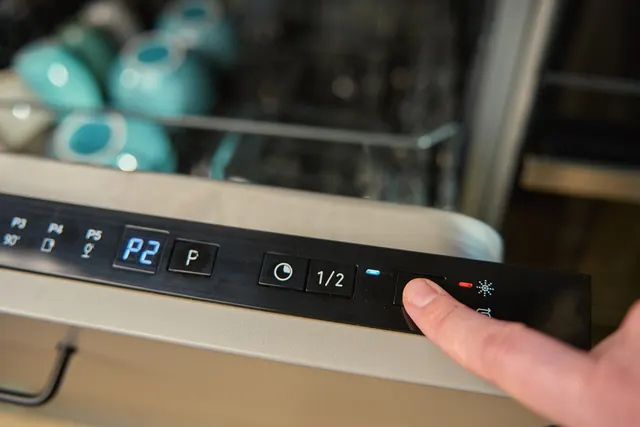
The pump needs a command to run. A faulty control board, timer, sensor, or wiring connection can interrupt that command or stop the cycle before draining finishes. An interrupted cycle can also leave water behind without a failed board.
Write down any displayed error code before attempting a reset, and look it up in your model's manual. Codes usually identify a condition to investigate, not a guaranteed replacement part. Use only the manufacturer's cancel, drain, or reset procedure, and only under the safe test conditions below.
Don't open the control console, bypass a safety switch, or perform DIY electrical testing. Professional diagnosis helps separate a control failure from a pump, wiring, or water-level problem so you aren't buying an expensive board on a guess.
What to Do When Your Dishwasher Won't Drain
Start with the accessible maintenance checks, not repeated wash cycles. Use this checklist to work through them in order:
- Disconnect power. Use the safety steps above for the dishwasher and any disposal. If water is near electrical connections, stay clear and get professional help.
- Remove pooled water if necessary. Let it cool, protect the floor with towels, and use a plastic cup and sponge without reaching blindly into the sump. Watch for sharp debris. A normal small amount below the filter doesn't need to be dried out.
- Clean the removable filter. Follow your manual, then seat and lock every filter piece correctly.
- Check the disposal and air gap, if fitted. Look for a backed-up sink or visible debris, using the safe checks in those sections.
- Inspect the visible drain hose. Look for pinching or leaks without disconnecting or rerouting it.
- Run one monitored test only if it's safe. All parts and caps must be reassembled, the surrounding area dry, and there must be no active leaks, sink backup, damaged wiring, burning smell, or other electrical warning signs. Restore power with dry hands and follow the manual's drain-only or short test-cycle instructions. Stay nearby through draining. Stop the test if water leaks, backs up, or unusual noises return, and disconnect power if safe.
If the water still doesn't drain normally, stop using the dishwasher and arrange service. Repeated cycles won't clear a failed part and may make a backup worse.
When to Call for Dishwasher Repair
If basic cleaning doesn't solve the problem, further investigation usually goes beyond homeowner maintenance.
Schedule professional help if:
- Water remains after basic troubleshooting or repeatedly returns to the tub
- The drain pump hums, grinds, or makes other unusual noises
- An error code persists or comes back after a model-approved reset
- Water leaks around the dishwasher, hose connections, or cabinetry
- The problem began after installation or a disposal replacement
- Diagnosis requires electrical testing, hose disconnection, or internal component access
For active leaks, stop using the appliance, disconnect power if safe, and close its water supply valve if you can safely reach it. Our dishwasher leaking guide explains other possible sources of water on the floor. Burning smells, sparks, or repeated breaker trips mean no further test cycles until a professional has inspected the problem.
Preventing Future Dishwasher Drainage Problems
A few routine habits help keep food and debris out of the drain path:
- Scrape off excess food. Remove bones, large scraps, and heavy grease before loading dishes.
- Clean the filter regularly. Use the manufacturer's recommended interval and check sooner if residue or odors build up.
- Keep labels and loose debris out. Remove paper labels from jars and don't load chipped or broken glassware.
- Keep the connected disposal and sink drain clear. Follow the disposal's use instructions and address slow sink drainage promptly.
- Protect the exposed hose. Keep under-sink storage from pressing against it or its connections.
- Act on early changes. Slower draining, recurring odors, or an air gap that starts spilling water are reasons to investigate before the next full load.
Get Professional Help With a Dishwasher That Won't Drain
Dishwasher drainage problems range from a dirty filter to a failed pump or control. Safe cleaning can resolve a simple obstruction, but recurring standing water is a reason to find the cause rather than keep running the machine.
Allsafe Appliance Repair offers professional dishwasher repair in Glendale to identify what's preventing proper drainage and recommend the right fix. When booking service, have your model number, any error codes, and a list of the checks you've already tried ready to share with the technician.