
Dishwasher Smells Bad? What the Odor Means and What to Do
In this article
If your dishwasher smells bad, it is usually a sign that something in the wash, drain, or dry process is allowing residue or moisture to linger. Odors rarely appear without a reason, and while some causes are minor, others point to performance problems that should not be ignored.
This article explains why a dishwasher smells bad, what symptoms often appear alongside odors, and which basic visual and wipe-down checks are safe to consider. It also explains when professional service is the smartest next step to prevent repeat issues.
Dishwasher Smells Bad: Common Causes and What to Look For
When a dishwasher smells bad, the odor typically falls into one of three categories. Sour smells usually come from food residue or grease buildup. Swampy smells often indicate standing water or drainage problems. Musty odors tend to develop when moisture is not fully removed at the end of the cycle.
Identifying which type of smell you are dealing with helps narrow down the cause and prevents unnecessary trial and error.
1) Trapped food debris in the wash and circulation areas
One of the most common reasons a dishwasher smells bad is trapped food debris. Even with pre-rinsing, small particles can settle in hard-to-reach areas and begin to break down between cycles.
These symptoms often suggest food debris buildup.
- Sour odors that are strongest right after a cycle finishes
- Visible residue or grit along the bottom of the tub
- Smells that briefly improve after a hot cycle, then return
Surface cleaning of accessible areas is safe and often helpful. However, if food debris seems to reappear quickly, circulation or wash performance, such as spray arm movement or pump action, may not be functioning correctly.
2) Standing water caused by incomplete draining
If water remains in the dishwasher after a cycle, odors can develop rapidly. Standing water holds onto food particles and creates the swampy smell many homeowners notice when opening the door.
These warning signs point toward drainage concerns.
- Water pools at the bottom after cycles
- Strong odors are released immediately when the door opens
- Dishes that feel gritty or appear poorly rinsed
Drainage problems are often closely tied to odor complaints. If your dishwasher smells bad and you also notice water left behind, it may help to review common causes of a dishwasher not draining to understand why professional service is often required.
3) Buildup around the door seal
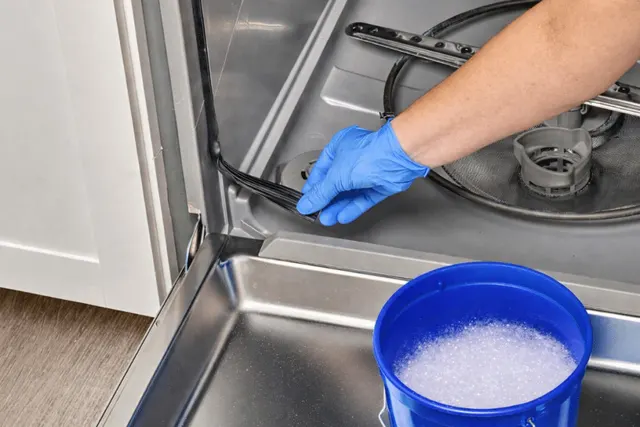
The door seal keeps water inside the unit during operation, but it can also trap moisture and residue along its folds. Over time, this buildup can create persistent odors, especially when the dishwasher remains closed between cycles.
Look for these common gasket-related indicators.
- Odors concentrated near the door opening
- Film or grime visible along the seal surface
- Smells that temporarily improve after wiping the seal
Cleaning the accessible portion of the seal is safe. If the seal appears damaged or the odor persists, professional evaluation can confirm whether alignment or sealing issues are contributing to moisture retention.
4) Grease and detergent film buildup
Grease, starches, and detergent residue can slowly coat interior surfaces. This film holds onto odor and can make a dishwasher smell bad even when there is no standing water.
These patterns often point to residue-related odors.
- Cloudy or slick interior surfaces
- Odors that worsen gradually over time
- Dishes that look clean but do not smell fresh
Residue buildup can also affect overall wash performance, which may lead to other complaints, such as incomplete drying.
5) Poor drying performance, leaving moisture behind
Drying plays a major role in odor prevention. When moisture remains on interior surfaces, odors develop quickly between cycles. This is a common reason a dishwasher smells bad even though dishes appear mostly clean.
These clues suggest drying performance may be part of the issue.
- The interior stays wet long after the cycle ends
- Odors are strongest the day after running the dishwasher
- Plastic items remain damp and hold smells
Drying issues are often connected to heating or airflow problems. If odor concerns seem tied to moisture retention, learning more about dishwasher won't dry can help explain why professional testing is important.
6) Hard water mineral deposits
Hard water minerals leave deposits that create rough interior surfaces. Those surfaces make it easier for residue to cling and odors to develop. Mineral buildup can also interfere with proper spray action.
Mineral-related odor problems often include the following signs.
- White or chalky residue inside the tub
- Glasses that appear hazy after washing
- Odors that worsen as spotting increases
If mineral buildup becomes severe, professional service can determine whether the dishwasher is filling, heating, and rinsing properly.
7) Sink or household drain issues affecting the dishwasher
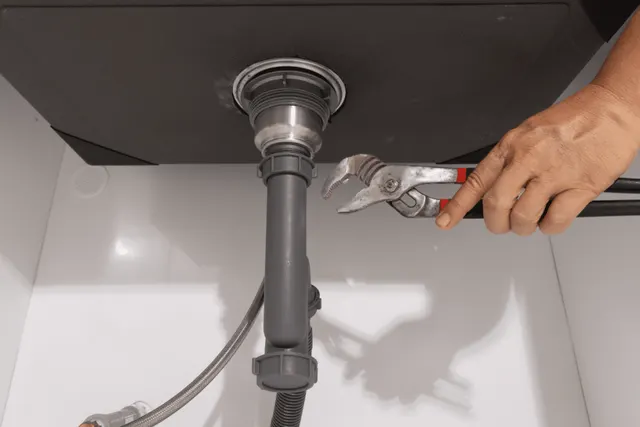
In many kitchens, the dishwasher shares drainage pathways with the sink. If those pathways are restricted, odors can travel back into the dishwasher and create unpleasant smells even when the unit itself is functioning normally.
These kitchen-wide symptoms often appear together.
- Drain odors near both the sink and dishwasher
- Gurgling sounds during or after dishwasher operation
- Slow draining at the sink paired with dishwasher odor
Because drainage systems vary, professional diagnosis helps prevent repeat odor problems and protects dishwasher components from unnecessary strain.
When odors signal the need for professional service
Some odor causes are routine maintenance-related. Others indicate mechanical or performance problems that require expert attention. If your dishwasher smells bad after surface cleaning and the odor keeps returning, the issue is likely deeper than routine upkeep.
These situations typically warrant professional diagnosis.
- Repeated standing water after cycles
- Odors combined with poor cleaning or gritty residue
- Sudden changes in drying performance
- Smells that worsen over time instead of improving
If odors are paired with drainage or drying symptoms, addressing those problems early can prevent larger repairs. For ongoing odor, wash, or drain concerns, scheduling professional dishwasher repair in Santa Monica ensures the root issue is properly diagnosed and resolved.