
GE dryer won’t start? Common Causes and What They Mean.
In this article
When your GE dryer won't start, laundry can pile up fast. Wet clothes sit in the drum, the next load gets delayed, and it may be hard to tell whether the problem is simple or serious. Some no-start issues are caused by settings, a tripped breaker, or a door that is not fully latched. Others point to a failed switch, thermal fuse, motor, control board, or another internal component that requires professional diagnosis.
Before assuming the dryer needs a major repair, pay attention to how it responds when you press start. Does the control panel light up? Do you hear a click, hum, beep, or nothing at all? Does the door close firmly? These details can help narrow down the problem before a technician arrives.
Why a GE dryer won't start and what to check first
GE dryers rely on several systems before a cycle can begin. The dryer needs the right power supply, the door must latch, the controls must send the start signal, and safety devices must be intact. If one part of that system fails, the dryer may stay silent, click without starting, hum without tumbling, or light up without running.
Keep troubleshooting limited to safe, surface-level checks. Do not open dryer panels, access wiring, test internal parts, bypass switches, or move the appliance to inspect electrical connections. Dryers contain high-voltage components and should be serviced by a qualified appliance technician.
Safe observations you can make include:
- Whether the control panel lights up.
- Whether the dryer clicks, hums, beeps, or stays silent when you press start.
- Whether the door closes firmly without forcing it.
- Whether a lock icon, a delayed start setting, or an error code appears.
- Whether the dryer stopped suddenly or became harder to start over time.
- Whether you noticed unusual heat, odors, or noises before the problem started.
Control lock, delay start, or cycle settings may be active
Not every no-start complaint is caused by a failed part. Some GE dryers include control lock, delay start, sensor cycles, or model-specific settings that can make the dryer seem unresponsive. If one of these settings were changed accidentally, the dryer may not start the way you expect.
Look at the visible control panel for a lock symbol, delay indicator, or message on the display. If you have the owner’s manual, check the model-specific instructions for unlocking the controls or canceling delay start.
Setting-related clues may include:
- The control panel lights up, but the buttons do not respond normally.
- A lock icon appears on the display.
- A delayed start setting is active.
- The dryer beeps but does not begin tumbling.
- Only certain cycles seem affected.
If the settings look normal and the dryer still will not run, the issue may involve the user interface, control system, or another internal part. When a GE dryer won't start even after visible settings look correct, professional diagnosis is the safest next step.
A household power issue may be affecting the dryer
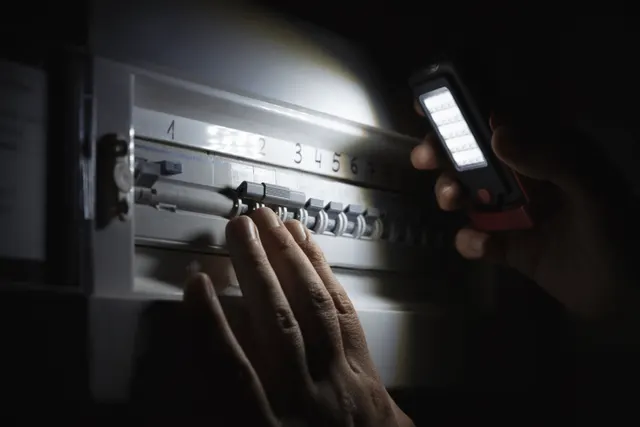
A GE dryer needs the correct electrical supply to start and run. In some cases, the dryer may appear to have partial power. For example, lights or a display may come on, but the dryer may still not have the power needed to start the motor or complete the cycle.
If you can safely access your home’s breaker panel, check whether the dryer breaker has tripped. Resetting a tripped breaker once may restore operation. However, repeated tripping is a warning sign and should be checked by a professional. Do not move the dryer, inspect wiring, remove panels, or test electrical components yourself.
Electrical supply concerns may appear as:
- No lights, sounds, or display response.
- Lights on the panel, but no tumbling.
- A breaker that trips when the dryer starts.
- Intermittent operation from one cycle to the next.
- Hot, burning, or electrical odors near the appliance.
A technician can determine whether the failure is inside the dryer or connected to the home’s electrical supply.
The door latch or door switch may not be working
Your GE dryer is designed to run only when the door is fully closed. The door switch tells the dryer that the door is secure and that it is safe for the drum to tumble. If the latch is damaged, misaligned, or not engaging properly, the dryer may act as if the door is open.
This can happen gradually as the latch wears down from everyday use. It can also happen suddenly if the switch fails or the latch no longer lines up correctly. In some cases, the door may look closed but still not activate the switch.
Common signs of a door-related problem include:
- The dryer does nothing when you press start.
- The drum light stays on when the door appears closed.
- The door feels loose or does not latch the way it used to.
- You do not hear the usual click when closing the door.
- The dryer starts only if the door is positioned a certain way.
You can safely check the door opening for visible damage, clothing, or debris. The switch itself should be tested by a professional.
The start switch may be worn or unresponsive
The start switch sends the command that begins the drying cycle. Depending on your model, this may be a push-to-start button, rotary switch, or part of an electronic control interface. If the start switch fails, the dryer may appear to have power but still refuse to start.
A start switch problem may show up as:
- A button that feels loose, stuck, or different than usual.
- A click with no drum movement.
- A dryer that starts only after several attempts.
- Controls that light up while the cycle never begins.
- A no-start issue across multiple cycle selections.
Because the start switch is part of the dryer’s electrical system, it should not be guessed at or replaced without diagnosis. A technician can determine whether the switch has failed or whether another component is interrupting the start signal.
The thermal fuse may have opened because of overheating
Dryers include safety devices that help protect the appliance if temperatures become unsafe. One of those parts is the thermal fuse. If the dryer overheats, the fuse can open the circuit and stop the dryer from operating. When this happens, the dryer may not start again until the failed part is replaced and the reason for overheating is corrected.
Overheating should always be taken seriously. A no-start issue that follows long dry times, excess heat, or unusual odors may be connected to restricted airflow or another internal failure. If you recently noticed a hot odor, this guide on a GE dryer burning smell explains why that symptom should not be ignored.
Overheating-related warning signs may include:
- The dryer felt hotter than normal before it stopped starting.
- Clothes were taking longer than usual to dry.
- There was a burning, hot, or electrical odor.
- The dryer shut off before the cycle finished.
- The lint screen had heavy buildup.
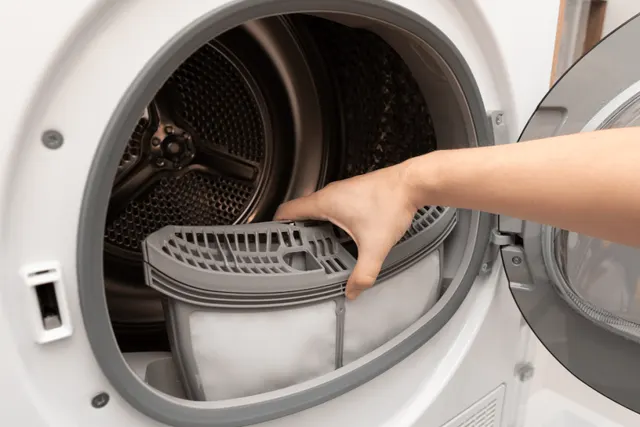
You can safely clean the lint screen and remove visible lint from the accessible lint trap area. Internal airflow checks, fuse diagnosis, and electrical testing should be handled by a professional. Replacing a thermal fuse without correcting the root cause can lead to repeated failure.
The belt or belt switch may be preventing operation
Many dryers use a belt to rotate the drum. Some models also include a belt switch that prevents operation if the belt breaks or loses proper tension. If the belt is broken, the drum may not turn. Depending on the model, the dryer may not start at all.
If a GE dryer won't start after making noise or stopping suddenly, the belt system is one possible area a technician may inspect.
Possible belt or drum movement symptoms include:
- The dryer made squealing or thumping sounds before the failure.
- The drum seemed uneven or noisy during recent cycles.
- The dryer stopped suddenly and would not restart.
- You hear a motor sound, but the drum does not move.
- The dryer sounds different from how it did before the issue appeared.
The belt, pulley, and drum support system is inside the dryer cabinet, so this is not a safe area for homeowner inspection. A technician can inspect the drum drive system and determine whether the belt failed on its own or because another part created extra strain.
The drive motor may be failing
The drive motor helps rotate the drum and move air through the dryer. If the motor fails, the dryer may not start, may hum without tumbling, or may begin running and then stop again. Motor problems can develop from normal wear, overheating, or added stress from another failing component.
If your GE dryer won't start and you hear a humming noise, avoid pressing start repeatedly. Repeated attempts may put additional strain on the motor or related parts, especially if you noticed a burning smell before the dryer stopped working.
Motor-related symptoms may include:
- A humming sound when you press start.
- The dryer tries to start but stops quickly.
- The dryer runs after cooling down, then fails again later.
- The drum does not move even though the controls respond.
- The dryer had unusual odors or noises before the no-start issue.
A failed motor is a more involved repair and should be diagnosed by a qualified appliance technician. Similar symptoms can also come from a seized drum component, broken belt, blower obstruction, or electrical issue, so accurate diagnosis matters.
The timer or control board may not be sending the right signal
Depending on your GE dryer model, cycle operation may be managed by a mechanical timer, electronic control board, or digital user interface. These parts coordinate the start signal, cycle timing, heat control, and communication between other dryer components. If a control part fails, the dryer may not start even when other parts are working.
When a GE dryer won't start across every cycle, a technician may need to determine whether the controls are sending the correct signal.
Control-related symptoms can include:
- The display behaves strangely or inconsistently.
- Buttons respond only sometimes.
- The timer does not seem to advance correctly.
- The dryer will not start on any cycle.
- The dryer starts unpredictably or shuts down early.
Because control systems involve electrical diagnosis, this is not a place for trial-and-error repairs. A professional can determine whether the control board, timer, user interface, or another connected part is causing the failure.
The dryer may have stopped mid-cycle before the no-start issue
Sometimes a no-start problem begins after the dryer shuts down during a load. This may happen because of overheating, a failing motor, restricted airflow, a control issue, or a safety device opening the circuit. If the dryer stopped during a cycle and now will not restart, mention that sequence when scheduling service.
A dryer that stops in the middle of a load may be protecting itself from unsafe operating conditions. It may also have a component that works briefly and then fails once it gets hot. You can learn more in this related guide about why a dryer shuts off mid-cycle.
If your GE dryer won't start after shutting down early, the timing of that failure can help narrow the possible cause.
Helpful details to note include:
- Whether the dryer stopped before the cycle ended.
- Whether the clothes were still wet or unusually hot.
- Whether the dryer restarted after cooling down.
- Whether there were noises or odors before the shutdown.
- Whether the same issue has happened before.
These details help the technician evaluate whether the issue is heat-related, motor-related, airflow-related, or control-related.
When to call a professional for a GE dryer that will not start
If your GE dryer won't start, limit troubleshooting to safe observations, checking visible settings, checking the breaker if it is accessible, and cleaning the lint screen. A dryer contains electrical parts, rotating components, heating systems, and safety controls that should not be accessed without proper training.
Call for professional dryer repair if you notice:
- The dryer hums but does not start.
- The dryer has a burning or hot smell.
- The breaker trips repeatedly.
- The dryer stopped mid-cycle and will not restart.
- The control panel behaves inconsistently.
- The door latch will not engage properly.
- The same problem returns after the dryer works briefly.
If a GE dryer won't start after these symptoms appear, professional service can help prevent unsafe guesswork and repeated part failures.
For the safest and most reliable repair, schedule dryer repair near Beverly Hills instead of opening the appliance or attempting electrical testing. A trained technician can identify the failed part, check for related issues, and restore your GE dryer without unsafe guesswork.